


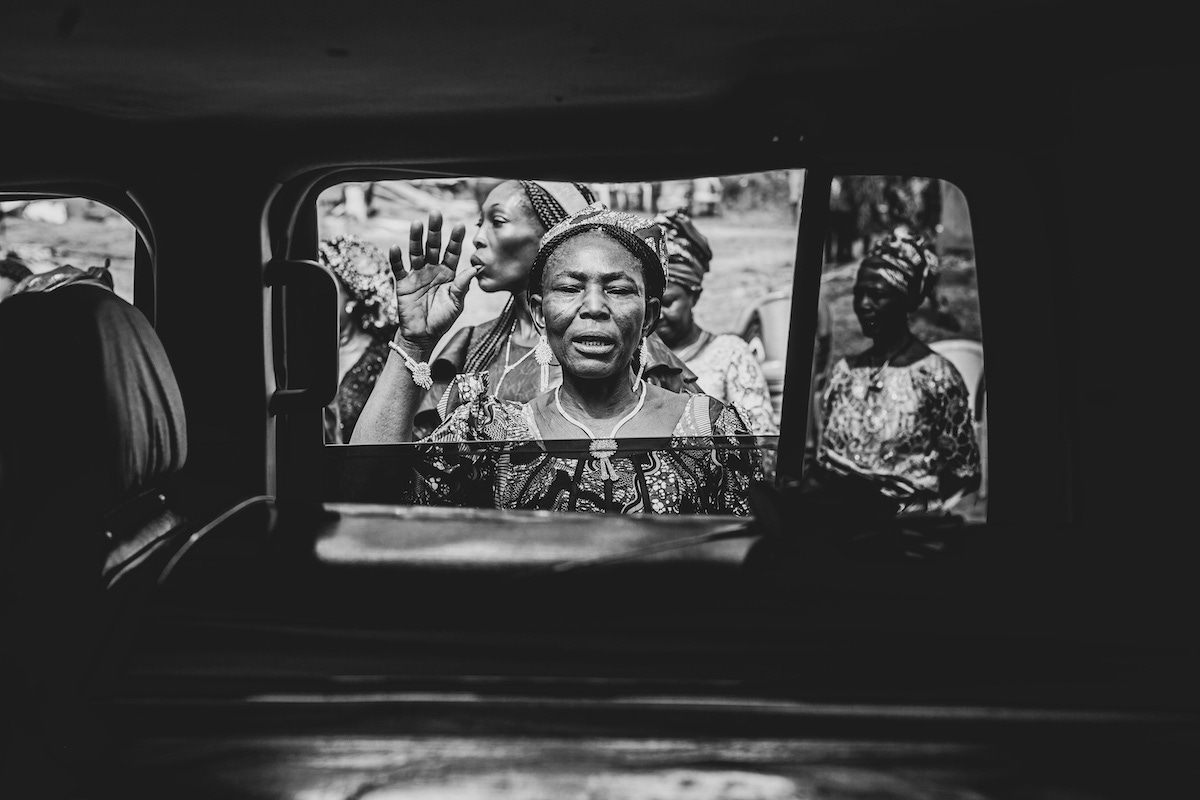
NIGERIA – More Christians were murdered over the past year in Nigeria than in the rest of the world combined, according to Open Doors, an international advocacy group for persecuted Christians. Islamic groups are the main perpetrators of these mass killings which are exacerbated by a weak and unresponsive government.
Though it is under-reported by international media outlets, Christian persecution by Muslim terrorist groups is not new in Nigeria. Genocide Watch estimates that 62,000 Nigerian Christians were killed between the years 2000 and 2024. In the past three years alone, terrorists have murdered almost 17,000 believers. Islamic groups are known to attack Nigerian believers during Christian holidays. For example, last year, on Christmas, at least 140 Christians were massacred near Jos in the North-Central region of Nigeria.
Origen would subscribe (maybe?)…
Ancient Christian answers for our culture’s deepest questions. Subscribe for a new article in your inbox every Monday.
Millions of Christians have also become displaced from their homes and are forced to live permanently in refugee camps set up for temporary living. Many of these refugee camps are known for their poverty, poor living conditions, and lack of adequate education. Refugees who choose to return to their homes can expect renewed violence.
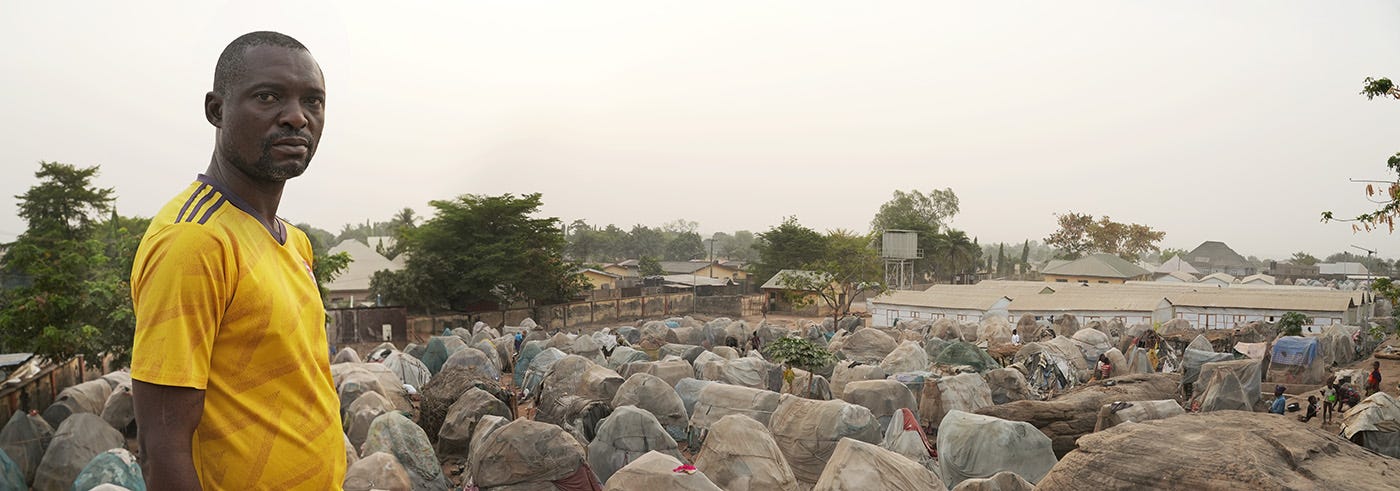
An Open Doors report published this month recounts one of the many reports of Christian persecution. Pastor Barnabas lives with his wife and children in a tent the size of a double mattress at one of the displacement camps where he ministers to other refugees. He tells the story of how Muslim Fulani militants attacked him and his family,
“I was on the farm with my brother, Everen, and his wife, Friday. We were walking when we heard rapid shooting of guns and other sounds…We didn’t know that the militants had surrounded us. [They] came with guns, machetes, [and] sticks. My brother was shot by the militants, and my brother’s wife was also shot and then macheted and killed by the militants.
Now, I have lost everything that I had. Everything in my home and village was burnt; I was left with nothing…We are displaced because of violence. The news doesn’t care about it, politicians don’t talk about it, we are remaining in darkness…being forgotten, being disregarded…We don’t have good hygiene, water, toilets [or] sanitation. Many people are dying...People only live here because it’s worse outside the camps—because of the horrendous persecution that has displaced them.”
The leading proponents of the persecution are Muslim groups like Boko Haram, Islamic State of West Africa Province (ISWAP), and militant Fulani groups. For years, popular culture has labeled Islam as a "religion of peace" to avoid offending Muslims. No religious or philosophical group wants to be defined by its extremists. However, when the so-called extremists represent an adequate portion of Muslim society, can extremism still be considered an outlier, or is it more reflective of the religion itself?
The Ayatollahs of Iran. The Taliban in Afghanistan. Hamas and Hezbollah in the Levant. Even supposed moderate Muslim countries like Saudi Arabia, Egypt, Jordan, and others severely persecute Christian converts. Muslim immigrants have brought with them a crime wave of theft, sexual violence, and murder across Europe. Last year, in a severely underreported event, 100,400 Armenians were violently displaced from Azerbaijan in what legal experts deemed a war crime—an event since called the Flight of Nagorno-Karabakh.
A so-called “peaceful Muslim” is a contradiction of Islamic doctrine. The teachings of Mohammed do not lead to a peaceful society, and it seems that Christians are always the first to suffer their violence.
But Christian persecution is a staple of history. St. Justin Martyr lived in the early 2nd century and was one of the earliest defenders of Christianity. Justin was beheaded for his faith, along with six other Christians. In his Dialogue with Trypho, Justin writes,
“Now it is evident that no one can terrify or subdue us who have believed in Jesus over all the world. For it is plain that, though beheaded, and crucified, and thrown to wild beasts, and chains, and fire, and all other kinds of torture, we do not give up our confession; but the more such things happen, the more do others and in larger numbers become faithful, and worshippers of God through the name of Jesus. For just as if one should cut away the fruit-bearing parts of a vine, it grows up again, and yields other branches flourishing and fruitful; even so the same thing happens with us. For the vine planted by God and Christ the Saviour is His people.”1
Just as Christ died to bring us life, the martyr’s witness brings to life the dead bones of participants and onlookers. There is a redeeming factor in the martyr’s blood. The one who witnesses a martyrdom witnesses a terrible yet remarkable thing. Through the crushing of one flower underfoot by a violent man, the seed of the Gospel is buried beneath the earth—thus, the martyrs’ blood springs forth in life to a field of innumerable flowers.
The Muslims are doing the one thing that is sure to lead to the conquering of their empire by Christianity—they are killing Christians. God derives a special pleasure in conquering the hearts of those who previously hated the one for whom the martyrs die.
Christians pray for their suffering brothers, asking God for their deliverance—or, if not, that they may faithfully represent Jesus in their bloody baptism and be received into the eternal breast of their Savior. They also pray that God would rescue lost souls from the grip of Islam, using the martyrs' imitation of Christ’s sacrificial death and triumphant resurrection to bring them to faith.
Let us echo the words of our Nigerian brother, Pastor Barnabas, “If not for God’s intervention, if not for God’s love, I wouldn’t be where I am today. I hand everything over to God; let the will of God be done in my life.”
Justin Martyr, “Dialogue of Justin with Trypho, a Jew,” in The Apostolic Fathers with Justin Martyr and Irenaeus, ed. Alexander Roberts, James Donaldson, and A. Cleveland Coxe, vol. 1, The Ante-Nicene Fathers (Buffalo, NY: Christian Literature Company, 1885), 254.
Sir,
“Just as Christ died to bring us life, the martyr’s witness brings to life the dead bones of participants and onlookers. There is a redeeming factor in the martyr’s blood. The one who witnesses a martyrdom witnesses a terrible yet remarkable thing.”
You better write that thang! What a divine twist in the sovereignty of Almighty God; the vivifying blood of Christ makes the saints’ blood to have a vivifying effect, too 🙌🏿. You just made the devil look dumb. In the same way that not a drop of the Savior’s precious blood was in vain, neither is that of dear Nigerian brothers and sisters. God have mercy! Do save. Do protect and do bless Your people.
All of us should strive to be this brave and place our trust in the One who loves us most.