


UNITED STATES – A recent study in Science has discovered a link between declining bat populations and rising infant mortality rates. Per the report, bat populations in the United States have been decreasing since 2006, when an invasive fungus species began spreading through cave systems throughout North America. The mortality rates of bats exposed to this wildlife disease are at an average of 70 percent.
Bats provide natural pest control for farmers and are far more effective than chemical pesticides. In counties observed, the study found that farmers increased the use of pesticides linked to severe health issues by 31 percent as bat populations decreased. Concurrently, infant mortality rose by 8 percent or around 1334 deaths. After combining the additional financial costs for pesticides with damages for loss of life, the cost of decreasing bat populations in the United States is an estimated $39.6 billion between 2006 and 2017.
Origen would subscribe (maybe?)…
Ancient Christian answers for our culture’s deepest questions. Subscribe for a new article in your inbox every Monday.
Though often maligned and feared, bats are important to the ecosystem and human well-being. But bats are not the only species people unreasonably vilify. Recently, scientists have used a species of wasp to help save the Wilken’s finch from the brink of extinction.
The critically endangered bird is found on a remote island in the South Atlantic and only eats the fruit of the Island Cape Myrtle, a native tree. An invasive insect was accidentally introduced to the island, which secretes a liquid that causes the tree to weaken and eventually die.
Scientists discovered that a tiny parasitic wasp, Microterys Nietneri, has a proven history of controlling the insect. After confirming that the wasp would not negatively impact other species on the island, they released it there. Though only an estimated 60-90 pairs of the finches remain, scientists are hopeful after introducing the wasps two years ago, as the forest has already begun to recover significantly.
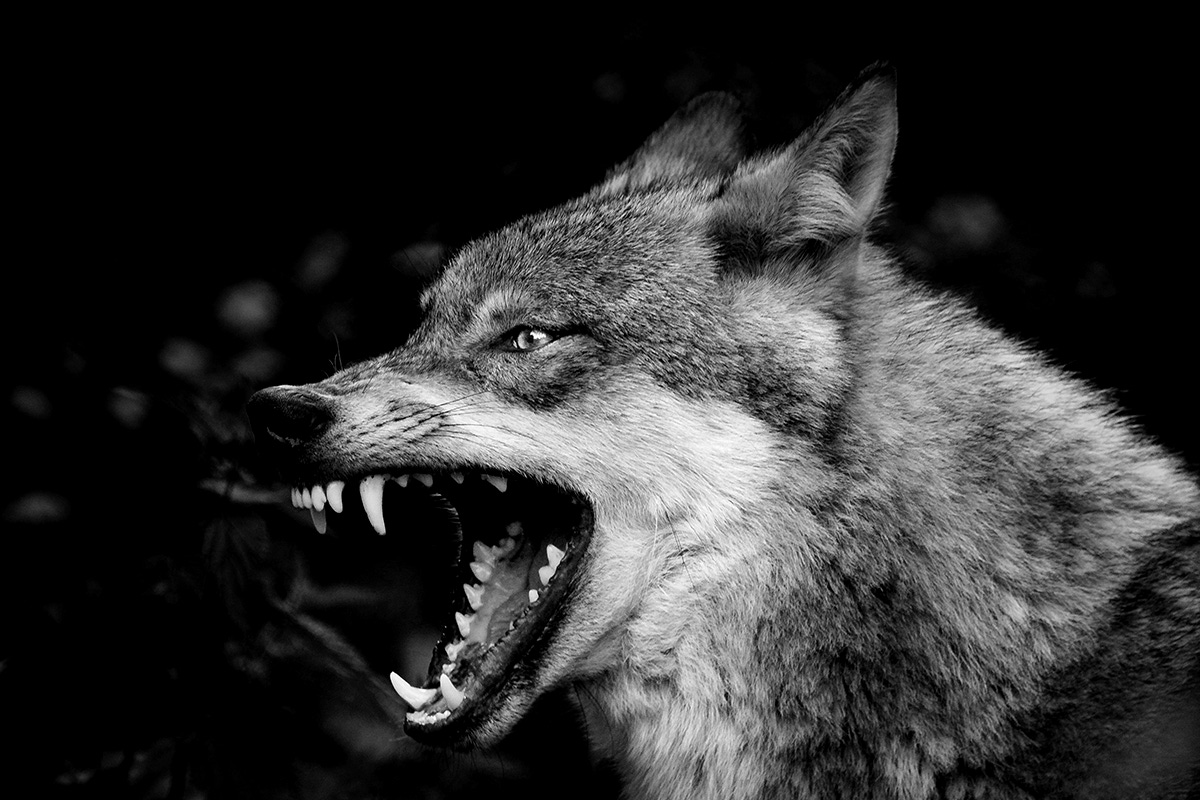
Both of these recent stories mirror past instances of unexpected ecological heroes. For example, hunters exterminated the gray wolf in Yellowstone National Park during the 1920s. The government offered cash prizes for each wolf killed, and concerned ranchers, who saw the wolves as dangerous to their livestock, took up arms to eliminate the threat.
Without wolves to regulate the elk and deer population, their numbers surged, severely damaging the vegetation. Migratory birds sought other locations for the summer, and even the quality of Yellostone’s rivers deteriorated due to bank erosion caused by the loss of plant life. Consequently, Yellowstone's beaver population dwindled to a single colony. However, when authorities reintroduced wolves in the 1990s, the effects were almost immediately reversed, even though the wolf population remains small to this day.
Bats, wasps, and wolves—not creatures the average person cares to think about. Yet, each one was created by God and is essential in His ordered design. Even the animals reflect aspects of God’s nature in bringing a level of order into disorder. If the people of God will not cry out, the stones (or, in this case, the beasts) will.
These animals, which are troublesome to most, are examples of God’s providence—the foreordained plan of a sovereign God in creating, sustaining, and guiding every aspect of creation to its ultimate end.
I often wonder why God created the leviathan. By Job’s account, the leviathan was a creature to be feared, “Lay your hands on him; remember the battle—you will not do it again! (Job 41:8)” There is no indication that God created the leviathan after the fall, and yet, God created the beast in a way that inspired terror, even in an Edenic world. Did not God design wolves with teeth to tear flesh and wasps with stingers to protect their nests?
Many of the early Church Fathers thought that leviathan represents Lucifer, which begs another question—why would God create Satan knowing the terrible impact he would have on creation? It is easy to say that in the grand scheme of time, the creation of the fallen angel will ultimately bring God maximum glory and, thus, ultimate joy to humans. Still, when the accusor buffets and tempts us, such a sentiment often seems trite and beyond reach.
And yet, in nature, we witness God's providence, which reassures us that He indeed has a plan, even amid the challenges we encounter. If God governs the sale of sparrows, offered as burnt sacrifices by the poor, how much more does He guide every detail of our lives, even if He does not reveal those details now?
We hold fast to the hope found in the resurrection of Christ, by whose example we too shall rise, and in that day, God will make all things clear. Origen was a controversial figure who lived at the turn of the third century. However, no one questions Origen’s ability as a theologian and philosopher. Reflecting on the hope of the resurrection and the providence of God, Origen writes,
“[After the resurrection, a person] would then know more clearly the reasons of all things which are done on earth...He will behold also the nature of the soul, and the diversity of animals (whether of those which live in the water, or of birds, or of wild beasts), and why each of the genera is subdivided into so many species; and what intention of the Creator, or what purpose of His wisdom, is concealed in each individual thing...
He will know, moreover, the nature of the apostate angels, and the reason why they have power to flatter in some things those who do not despise them with the whole power of faith, and why they exist for the purpose of deceiving and leading men astray. He will learn, too, the judgment of Divine Providence on each individual thing; and that, of those events which happen to men, none occur by accident or chance, but in accordance with a plan so carefully considered, and so stupendous, that it does not overlook even the number of the hairs of the heads, not merely of the saints, but perhaps of all human beings, and the plan of which providential government extends even to caring for the sale of two sparrows for a denarius, whether sparrows there be understood figuratively or literally.
Now indeed this providential government is still a subject of investigation, but then it will be fully manifested. From all which we are to suppose, that meanwhile not a little time may pass by until the reason of those things only which are upon the earth be pointed out to the worthy and deserving after their departure from life, that by the knowledge of all these things, and by the grace of full knowledge, they may enjoy an unspeakable joy.”1
If God uses bats to control pests, wasps to save trees, and wolves to form rivers, how much more will He watch over His children, the crown jewels of His creation? Does God not see the falling sparrow? Do the grasses and flowers die every winter apart from His providence? Is there a hair on your head that God has left unnumbered?
So trust and obey God, you of little faith. The One who fastidiously tends to all of creation is even more deeply invested in your well-being. Though His definition of "good" may seem puzzling now, it will one day be revealed as far more excellent and higher than your own. At the resurrection, you will understand if you endure in His love. Just as He created such frightening creatures to serve their purpose in nature, so too does He allow difficult circumstances in your life to accomplish His purpose in your life—not for your immediate comfort, but to refine you into a spotless image of God.
Origen, “De Principiis,” in Fathers of the Third Century: Tertullian, Part Fourth; Minucius Felix; Commodian; Origen, Parts First and Second, ed. Alexander Roberts, James Donaldson, and A. Cleveland Coxe, trans. Frederick Crombie, vol. 4, The Ante-Nicene Fathers (Buffalo, NY: Christian Literature Company, 1885), 298–299.
I love how you linked up two disparate things to talk about God's providence.
His wisdom and works are wonderful!